
An interview with Saltstone Studios about The Hearth & Harbour
Meet the Northern Irish team serving up the restaurant management narrative RPG
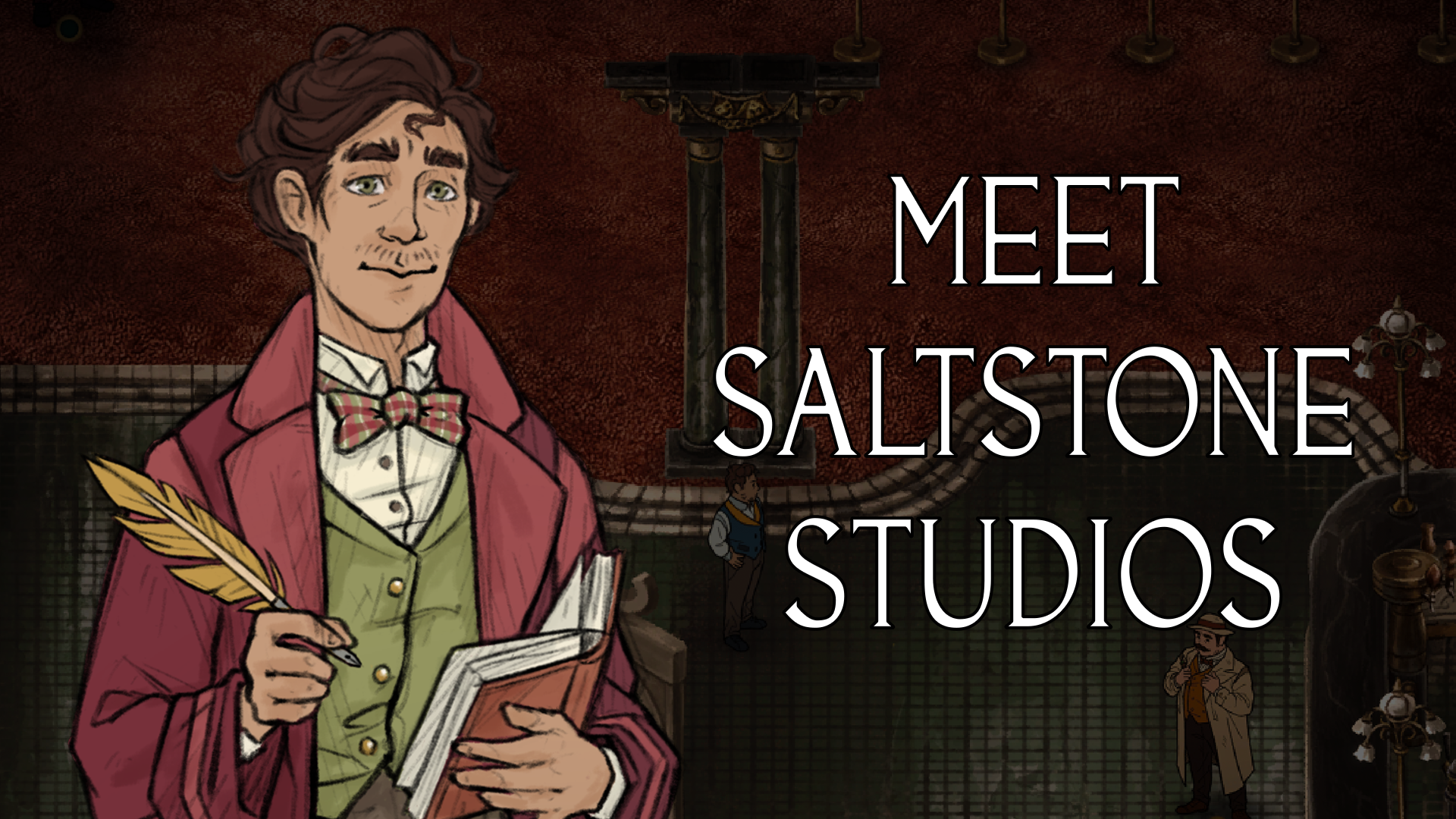
The tables are set, the stove is roaring, and service is about to begin! Your seat at The Silver Spoon awaits you in The Hearth & Harbour, the upcoming story-driven management RPG from Saltstone Studios, the developers behind The Pale Beyond.
In case you missed it, the team recently presented a closer look at the game during The Story Rich Showcase with an updated video here. We had the chance to speak with James Bruce (Creative Direction, Audio Direction & Original Score Composition), Jessica Campbell (Artistic Direction, Additional Animation & Character Artwork), and Thomas Hislop (Production Support, Programming, UX Development & Additional Narrative Design) to dish up even more details about the upcoming game.
Fellow Traveller: Hey Saltstone Studios, it’s great to have you all with us! Firstly, can you tell us how the idea for The Hearth & Harbour came together?
Thomas: Our first game, The Pale Beyond, was predominantly based on Shackleton’s Trans-Antarctic endurance expedition. The interesting thing is that the whole crew survived against all odds, only to miss the first half of World War I, come home, and immediately sign up and die in a trench for no good reason at all.
We thought it’d be interesting to explore this idea: a game set during a war, focusing on what happens to civilian populations and the effects on just the everyday person, in this case, the owner of a restaurant.
James: Experiencing the war through their eyes makes for some interesting game mechanics as well. The availability and price of things change, rationing is enforced, and attitudes about the conflict and the politics evolve.
FT: It’s no secret that running a restaurant in real life takes a lot of work and dedication. How have you translated that experience into the game?
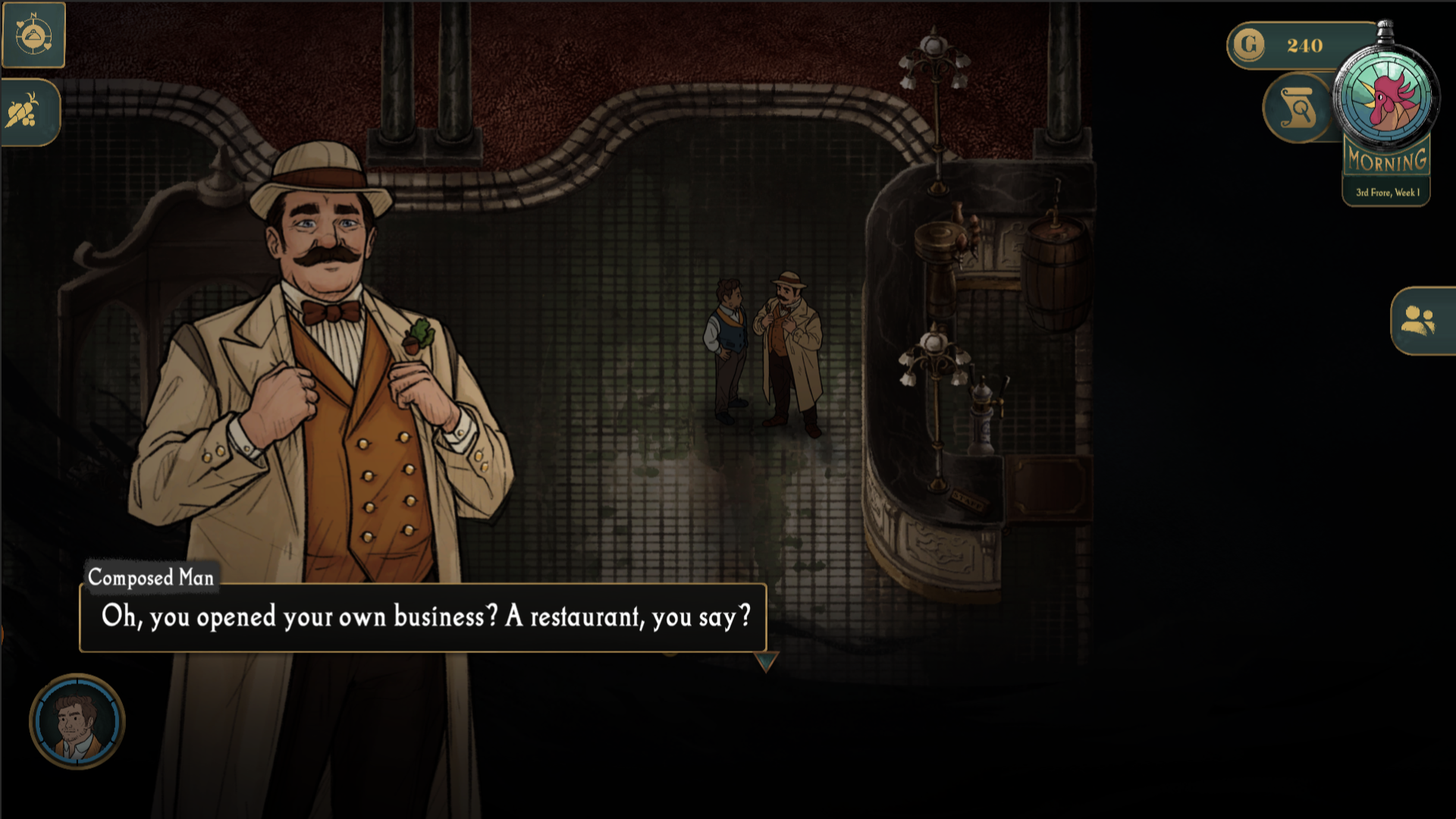
James: The people working at the restaurants are one of the most important aspects of the experience. Finding ways to make the ‘people’ bit of hospitality at the forefront of the game was really important to The Hearth & Harbour. We also wanted players to feel what it’s like to actually run a business. Which is, you're always downstream from things out of your control, and have to be agile and adapt to any situation.
A way we’re expressing that is through your relationships with other people: the vendor when you’re buying stock, which is then mirrored with your customers. How those relationships develop gives you access to social threads to pull, which may offer workarounds for some of the world’s problems imposed on you.
Jess: There’s also stress! We put burnout in the game, which feels like a fun prank that we've played on ourselves. You can die from stress in the game. If you get too burnt out, you lose all of your action points, and you die.
Thomas: I think anyone who's worked on a small team under deadlines with limited resources will be able to relate there.
FT: Can you dive into the process of creating the game’s protagonist, Kit Purcell? What elements go into making a compelling player character?
Thomas: We tried to develop the character as a blank slate, but we realised we needed inherent dramatic stakes to convey what we wanted to say about the world and the underlying messages of our game.
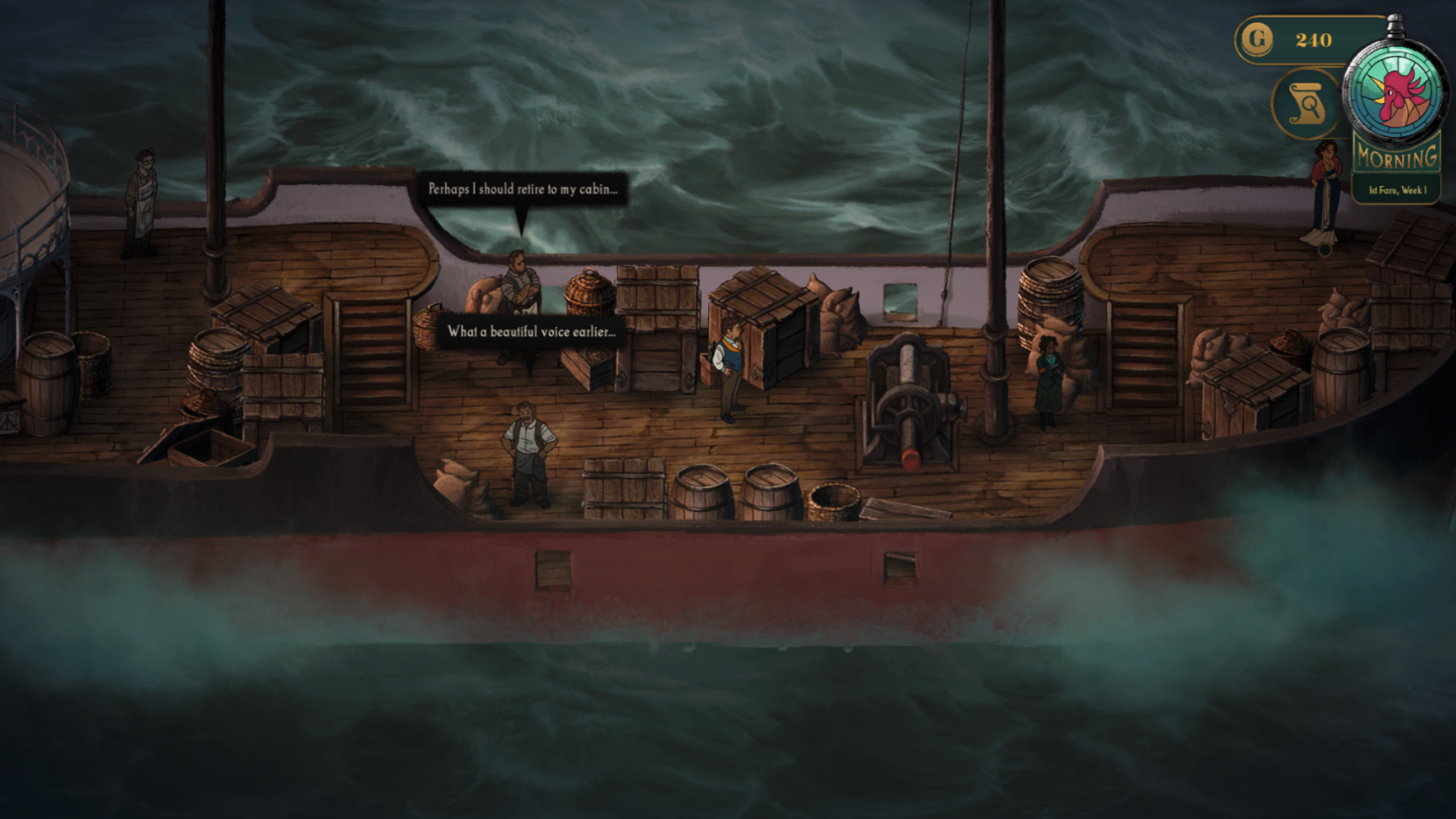
We settled on you being an immigrant from Grauberg (a fictional Germany), starting a new life in Lewthport (a fictional early 1900’s Belfast) during the First World War, so we did a lot of research into the experience of Germans in the United Kingdom and Ireland during World War I.
I moved to Northern Ireland when I was eight or nine years old, so when it comes to designing a city based on your local history, you take some things for granted because you’ve lived here your entire life. But since we’re trying to share our town with the world, Kit being an immigrant is a way for us to offer a fresh perspective that aligns with the player’s lack of knowledge about the area.
FT: The game centres on the player’s agency to make decisions that impact the wider community. Without spoiling too much, can you give an example of this happening in the game?
Jess: Every customer in the game is somebody you can develop a relationship with. They all have a quest line where you, as the player, act as a confidante to help them navigate a problem.
One of them centres on a very boisterous young man who’s very patriotic and is excited about the war. He attends soldier training camps and is preparing to fight the country you’re originally from.
He later develops a friendship with one of the other boys at the soldier camp, and thinks, “This guy is not gonna make it through the war, my friend is soft, he's not gonna make it.” That eventually culminates in his friend and himself trying to dodge the draft, which is a crime, but you’re given the option to help him or not.
Assisting him may put you at risk. If your restaurant is searched, for example, you could get in massive trouble for hiding a draft dodger. Your past as an immigrant could be exposed, so it puts you in danger to help this kid, but if you don't, then he will get sent off to war, where his fate is variable. He may or may not survive…
FT: The story takes place in the seaside harbour town of Lewthport. What are the qualities of the town that make it special and unique?
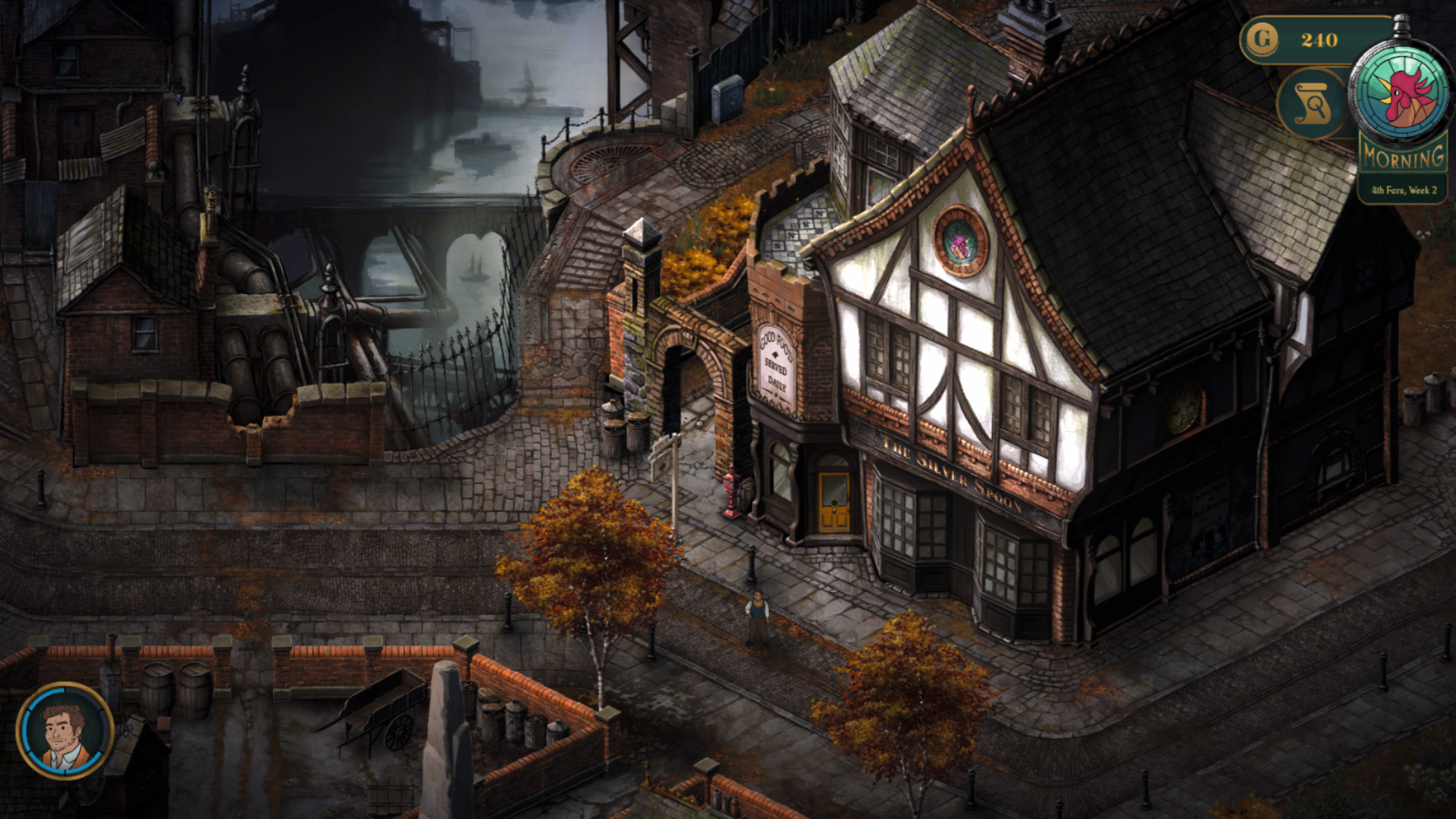
James: As we’ve mentioned, Lewthport’s design is heavily influenced by Belfast and also London. In the very beginning, Ethan (our Environment Artist and Game Designer) and I had long conversations about the setting. One of the exciting things about London for us was the fact that you can see these layers. You can see how this city was built upon over and over. Being able to experience its history passively was something we really wanted as it provides depth; you don't have to tell that, you just show it.
And Belfast was a city that boomed particularly during industrialisation. It fundamentally changed not only the shape of the city but the shape of the country around it. We wanted to show that, and part of that is that really cheesy phrase, “the city’s a character”. The environmental design features the old and new: more relaxed, pre-industrialised living butting up against the factories, machines, and chimneys of the modern world.
Thomas: Lewthport’s citizens also have permanent locations, making the city feel full of life. You walk across town and invite people to your restaurant. It made the whole city click. There’s a lot to discover, especially the various sub-locations and hangout spots, which feel inseparable from the cast of characters.
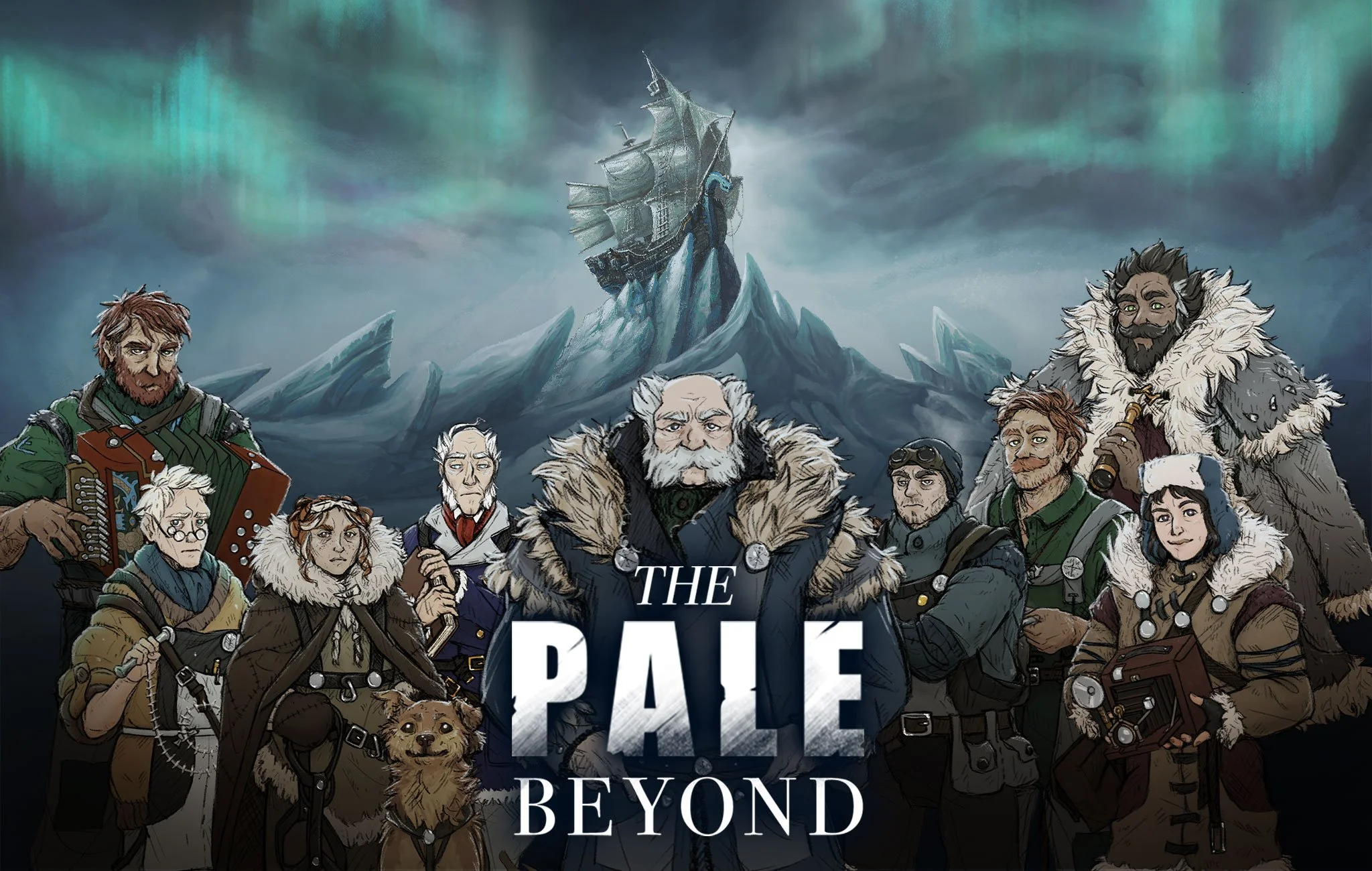
FT: The Hearth & Harbour is set in the same world and time period as your previous game, The Pale Beyond. What led you to connect the two games?
James: There's this moment at the start of Pale where you leave Lewthport, you leave this city, and a thought that passed through most of our heads at some point was, “What’s that city like?” And what does that tell us about these characters? How does that place — that some of the characters in Pale are from — inform the different cultures that we see in The Pale Beyond? What questions can we answer that exist for us and also for players?
We thought about how we could answer them without literally sitting down and making ‘The Pale Beyond 2’, which was not something we wanted to do at this stage. And I think looking at the cultural base, how they socialise, the music, the architecture, the food — in a way it will make Pale a deeper experience, because of the existence of The Hearth & Harbour.
FT: Apart from Kit, is there a member of Lewthport that you’re most excited for players to meet?
Jess: I'm very excited for everyone to meet the poet. He’s this really pathetic discount-byronic character. I don't even think it’s possible to offend him because he just assumes that you’re being nice to him all the time. You can be super mean to him, and he’ll interpret it as a compliment.
Thomas: Eric achieved something very difficult to do for the writing of the poet, which is to authentically write someone misusing vocabulary, thinking they're being smarter than they are, and it not coming across as just bad writing. I really like the poet. I’m in this picture…
James: I like the handsomest milkman, nice but dim. He wants nothing but goodness and kindness for everybody, so he’s very easy to forgive.
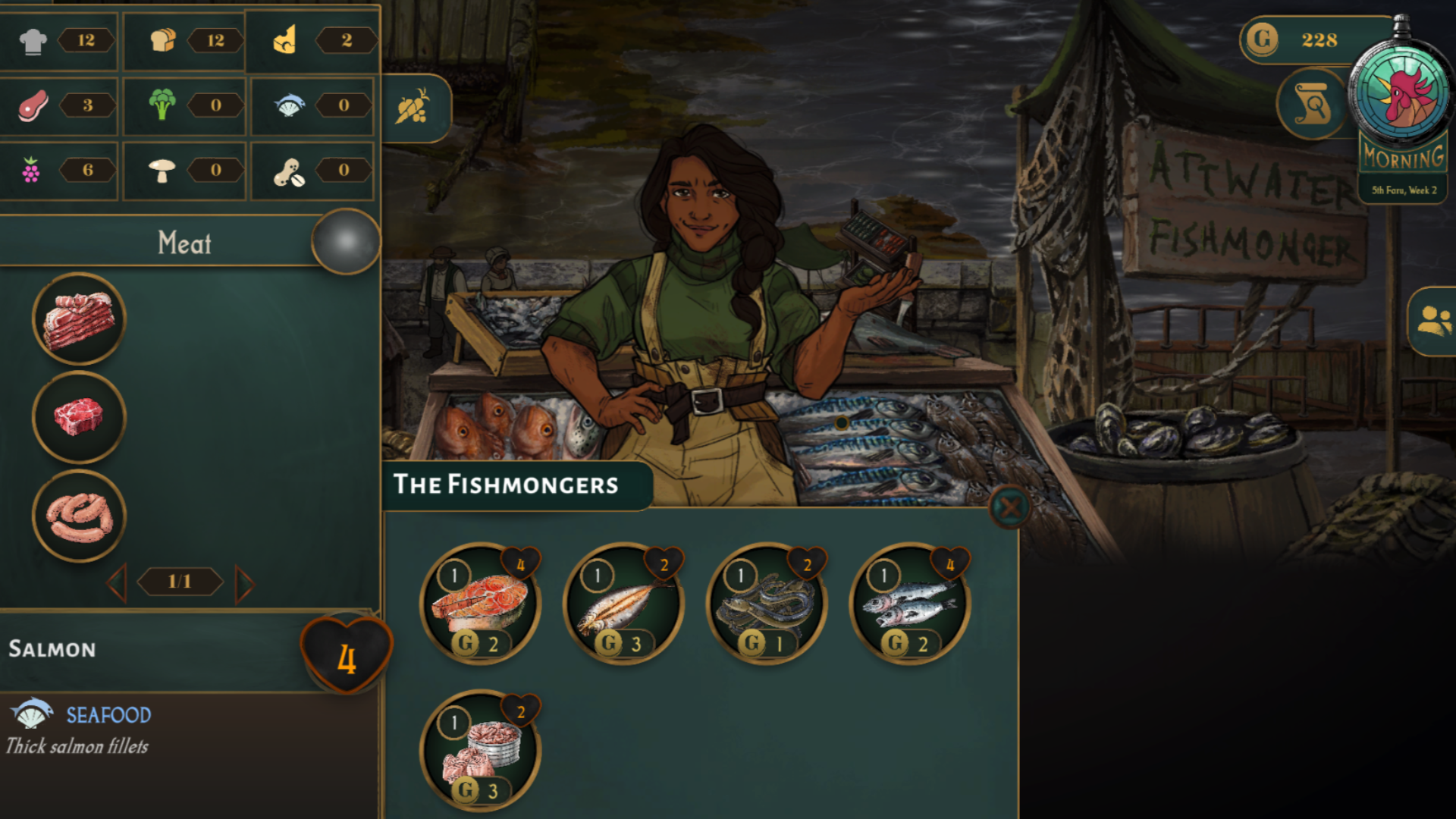
FT: Through the game’s favour system, players can learn new recipes and discover opportunities by helping the townspeople. Why was it important for you to tell a story about community and its importance during times of strife?
James: Literally, it’s how we survive. Everybody, whether you believe it truly or not, you're part of a community, large or small. You don't even have to like everybody in your community; you don't have to see them every day, but we live in a society, and we contribute in some fashion, positive or negative, always. I think every story is accidentally or deliberately about community because it's how we exist. I think it would've been quite difficult not to write about that.
Thomas: It's also no coincidence that between making the last game and doing this one, we have moved offices and set up a co-working hub space for the games industry, especially during a time when funding is pretty tight. We, other game dev teams, and production companies, have literally banded together in order to help each other.
FT: And last but not least, what is your favourite restaurant to dine at?
Jess: Camille Thai do a beautiful vegan green Thai curry spice bag, and it rocks my world. Anytime anyone visits the city, if they're from somewhere else, I always bring them to Maggie’s. It’s the quintessential Northern Irish place, where it’s all breakfast food, all day, the hangover cures are marked on the menu, and all the staff are mean to you.
James: For me, there are a couple of restaurants in Belfast that are pretty special and important, but one of them is this modern Italian place called Coppi. It’s a simple menu, really experienced good staff, excellent food, and an impeccable wine list.
Thomas: There was a Korean barbecue place in Amsterdam that I think about every week. In the same vein as that, I think one of my favourite restaurants — not even because I think it's got the best food ever, but because it’s the restaurant I've probably got the most positive memories associated with for a period of time — is probably the old Chinese buffet we used to work on top of.

A big thank you to the lovely team at Saltstone Studios for answering our questions! We can’t wait to plate up when The Hearth & Harbour releases later this year.
Don’t forget to make your reservation by wishlisting the game on Steam 🥘 Keep up to date with Saltstone Studios on their Bluesky, TikTok, Instagram, and Discord.
You can also follow Fellow Traveller on Bluesky, TikTok, Instagram, Threads, or jump into our official Fellow Traveller Discord.