
The (after-) Life of a Skull
Happy spooky season from the team at Feral Cat Den!
Happy spooky season from Feral Cat Den!
We hope you’ve been partaking in the wonderful rituals of horror flick screenings, pumpkin mutilation and candy gluttony this month! In this update we’re going to share a bit about the evolution of a prop, by showing the process through which a sketch becomes an actual object in our game.
It’s no secret that Nirvana Noir is expanding on the environment of Genesis Noir. We are building out a bustling city center and a slew of hyper-stylized environments, so naturally, this means that we are tasked with creating hundreds of new environment props to make these scenes come to life. Just in time for Halloween, we found ourselves building an eerie environment that called for skulls– and lots of them.
When drawing up an environment from scratch, we start with sketches to compose key scenes that are important to the story which will take place there. Sketches are great because they can be as literal or abstract as we want, and are a quick way for our team to churn out new ideas.
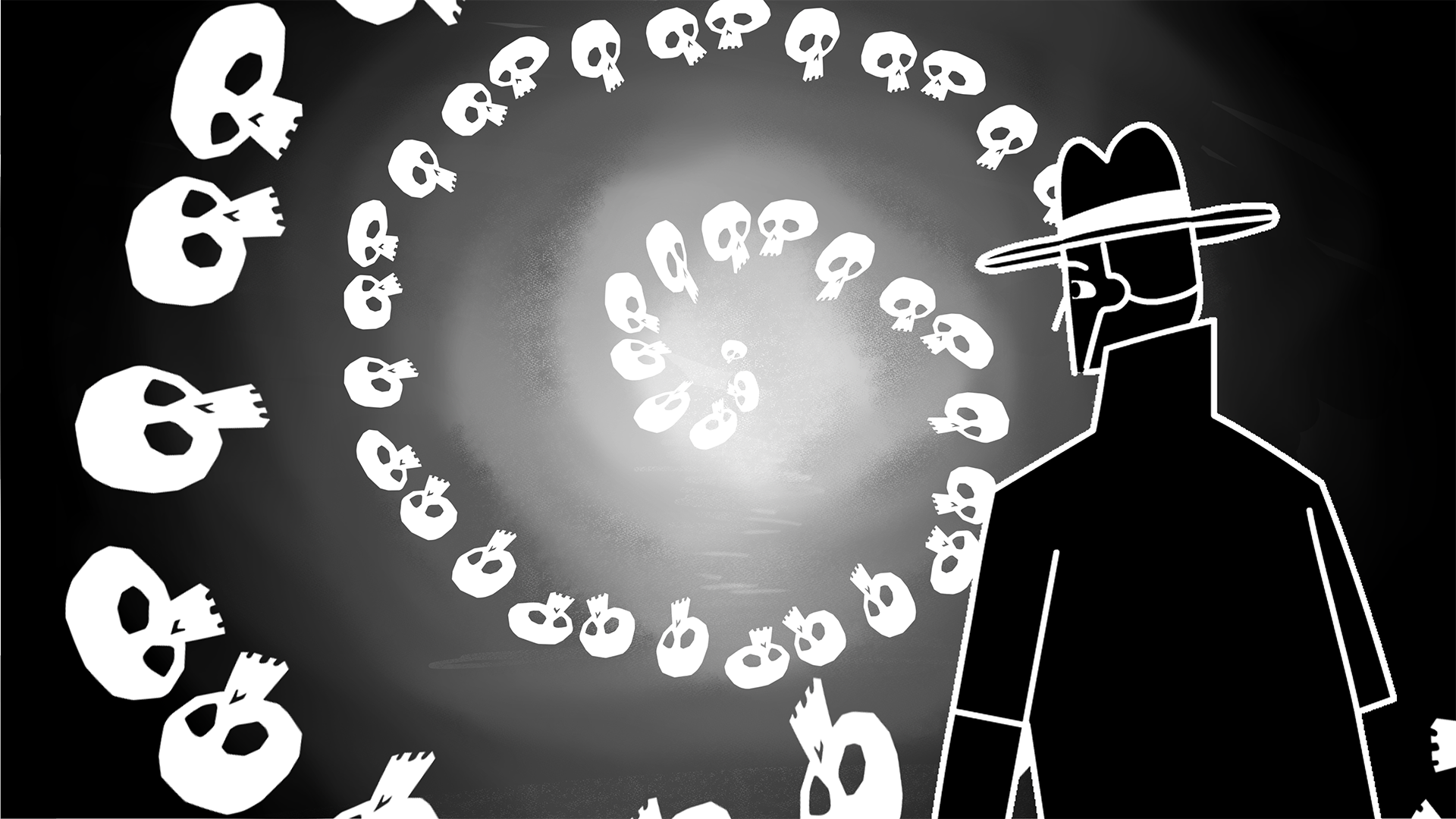
The goal was to create an environment of bones, which is easier said than done. The particular prop we focused on was a wall of skulls. Starting with a rough sketch, we were able to sequence the scene early on just by duplicating that drawing in the game engine. Although, we knew that the final prop would look much different eventually.
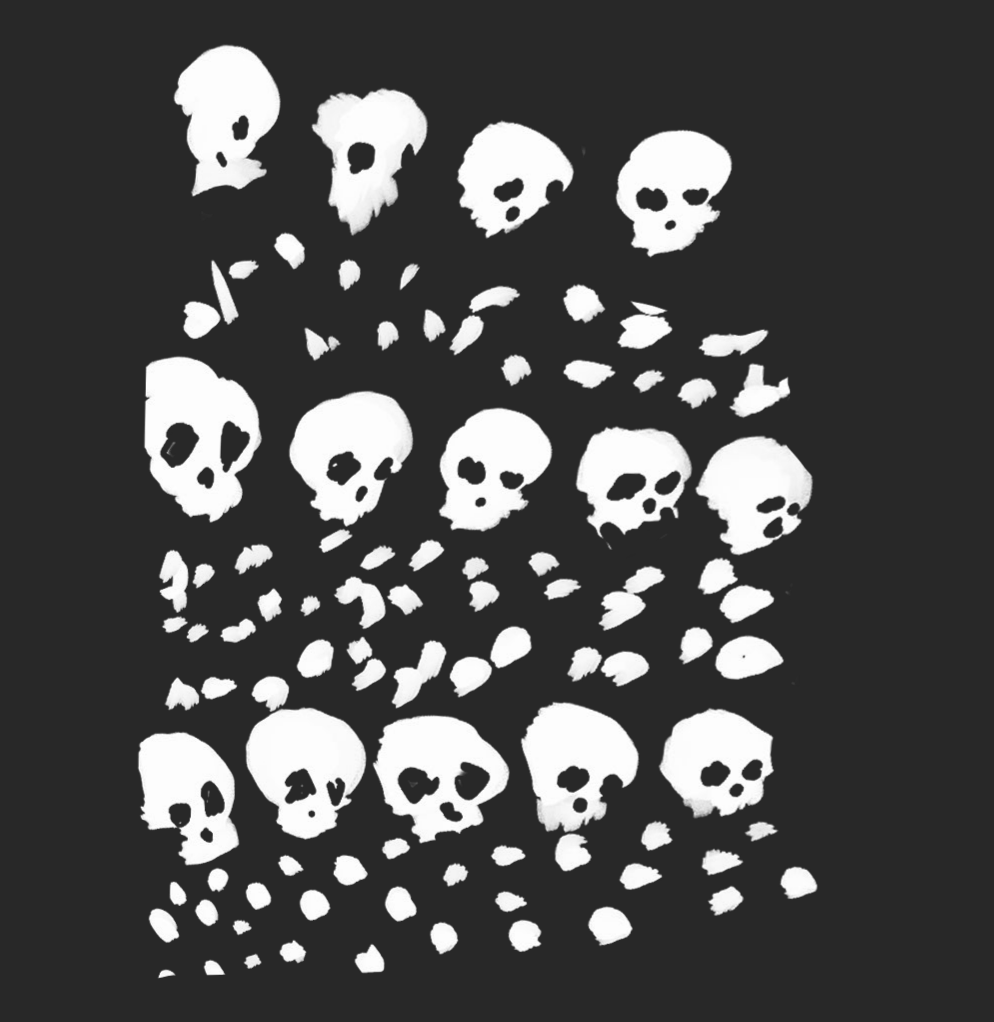
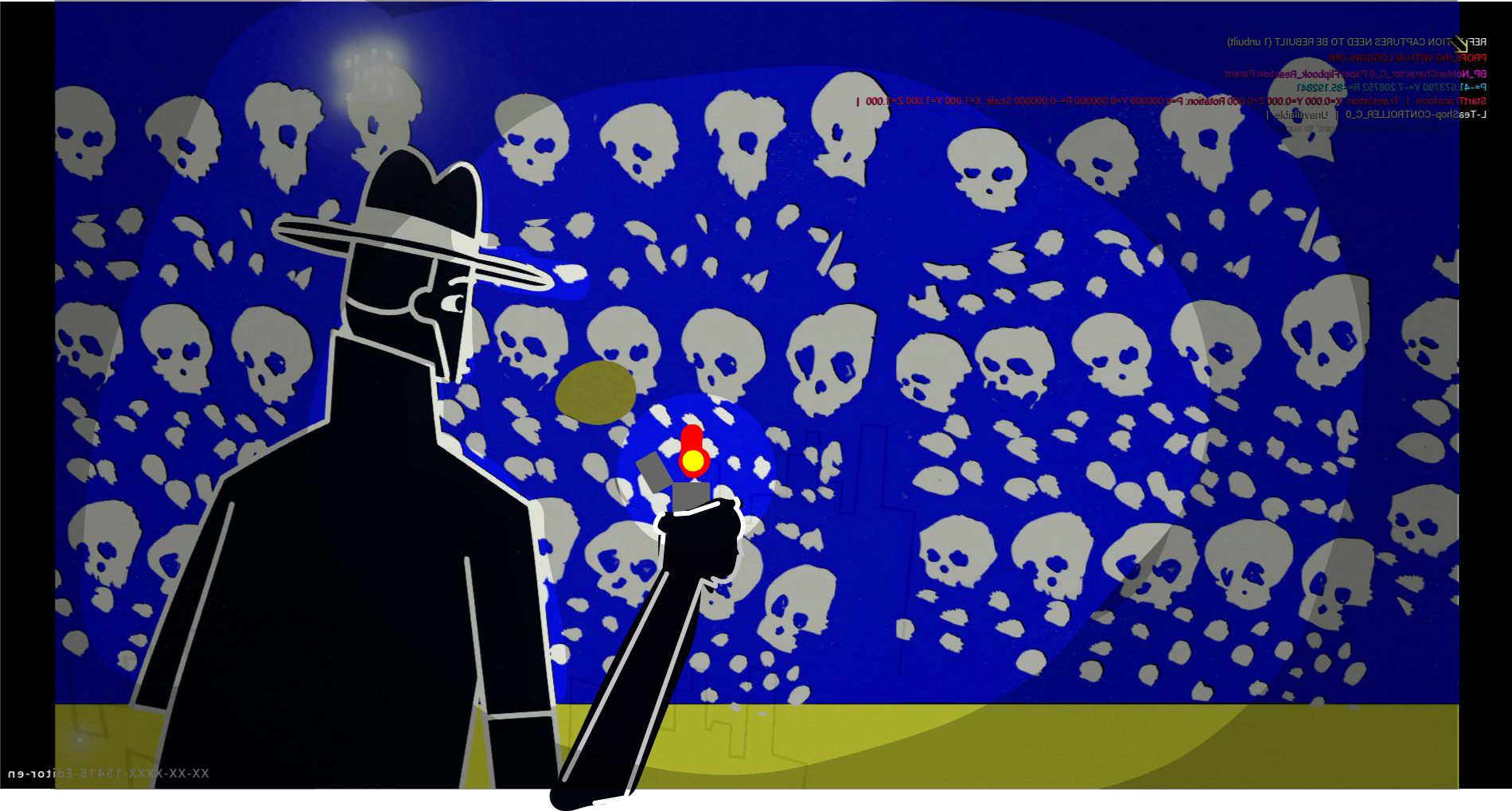
To make this a 3D asset and add depth to it, our first approach was to clone a prop you might be familiar with from Genesis Noir. Cloning is the simplest way to duplicate something and arrange it in a desired layout, however the result of cloning the same prop meant that there was no natural variation in the skulls, resulting in a monotonous visual.
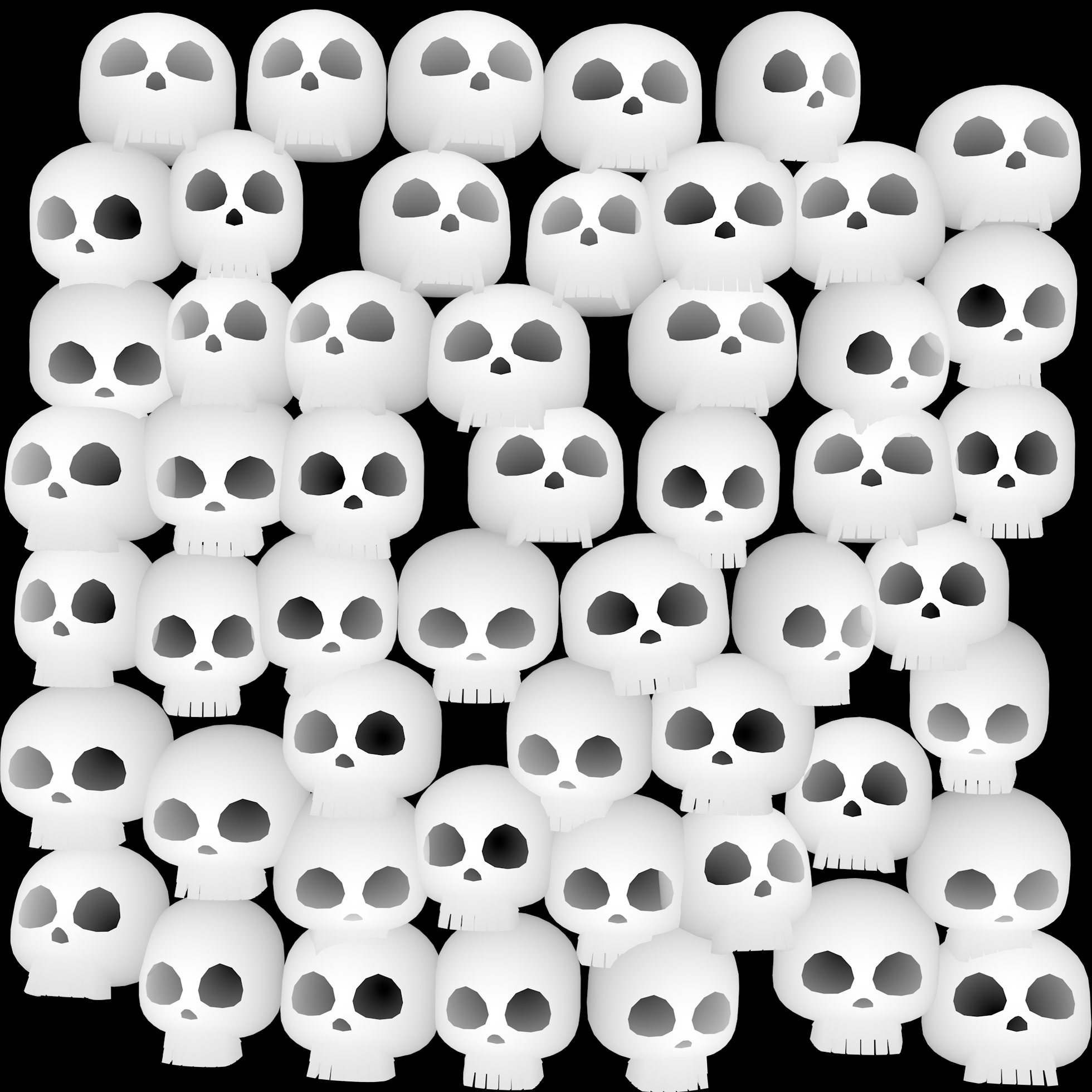
One issue was that the prop was meant to fade into the background, so we couldn’t have it be as highly contrasted as it is in the image above. Another consideration was that this was way more geometry than necessary. We knew we could get away with using a lot less information on screen, which would increase the performance of the game.
Our new idea involved using a single plane with some bumps to emulate a wall full of round skull shapes. We used the previous approach to inform the layout of the bumps on this next pass.
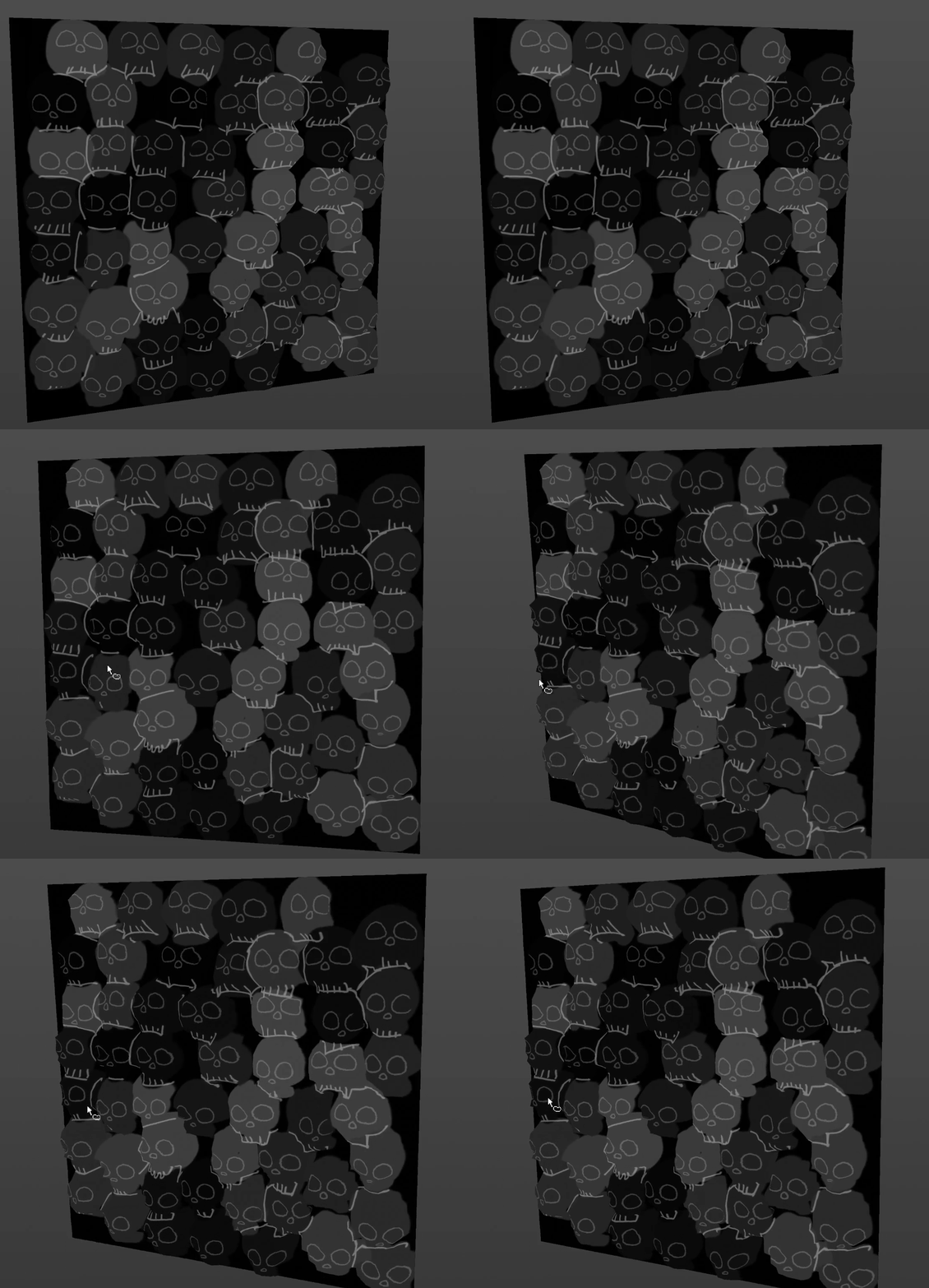
We ended up with a plane and were able to hand paint some rough blotches of various shades to give the impression of numerous skulls. Additionally, adding some minor linework to suggest the shapes of eyes and nose sockets helped us imbue some of our unique style into the prop.
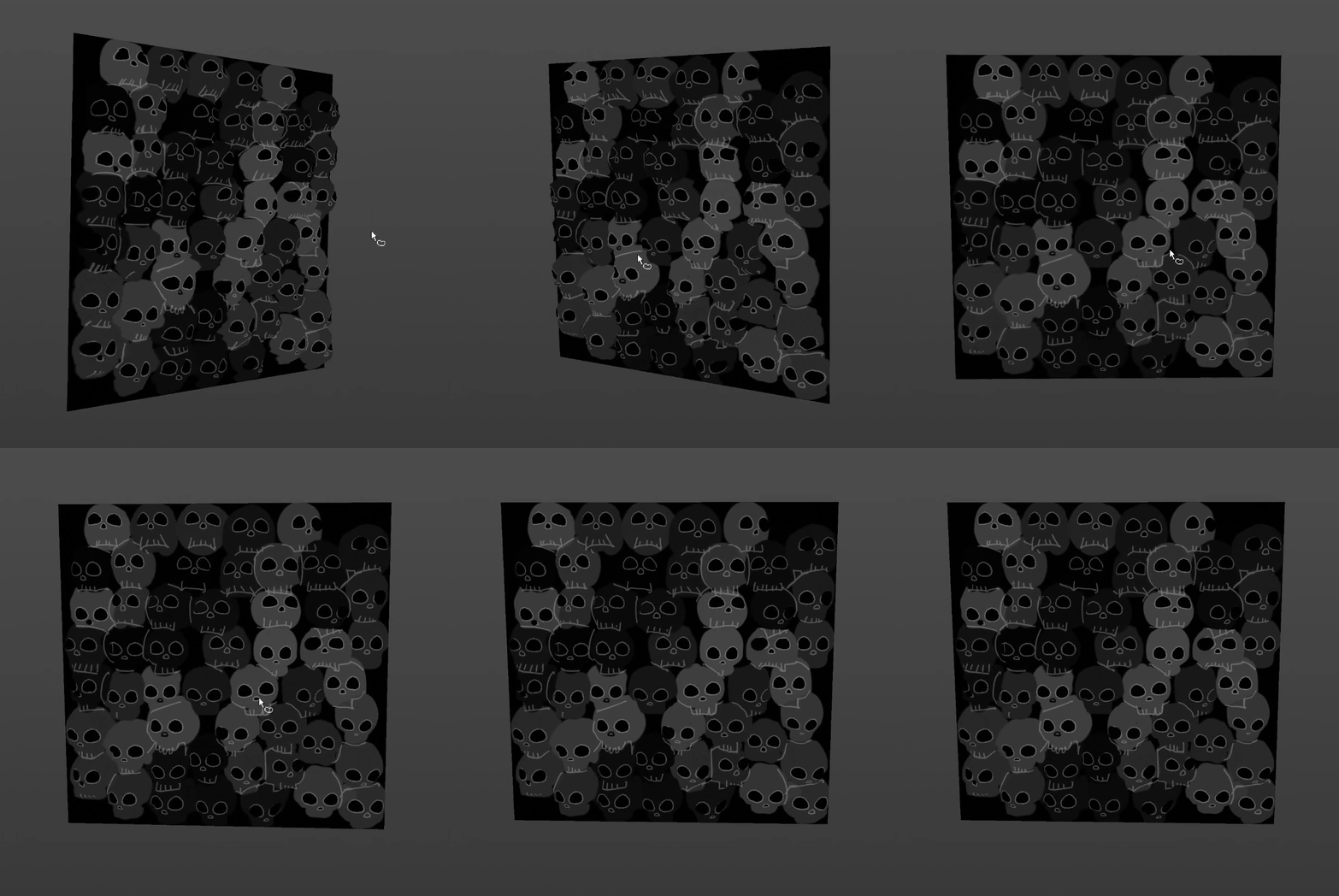
After the team seemed convinced by this approach, we added a few more tweaks such as darkening eyeholes for better legibility.
We were able to take it one step further by adding an outline material that would accentuate the curves of the craniums.
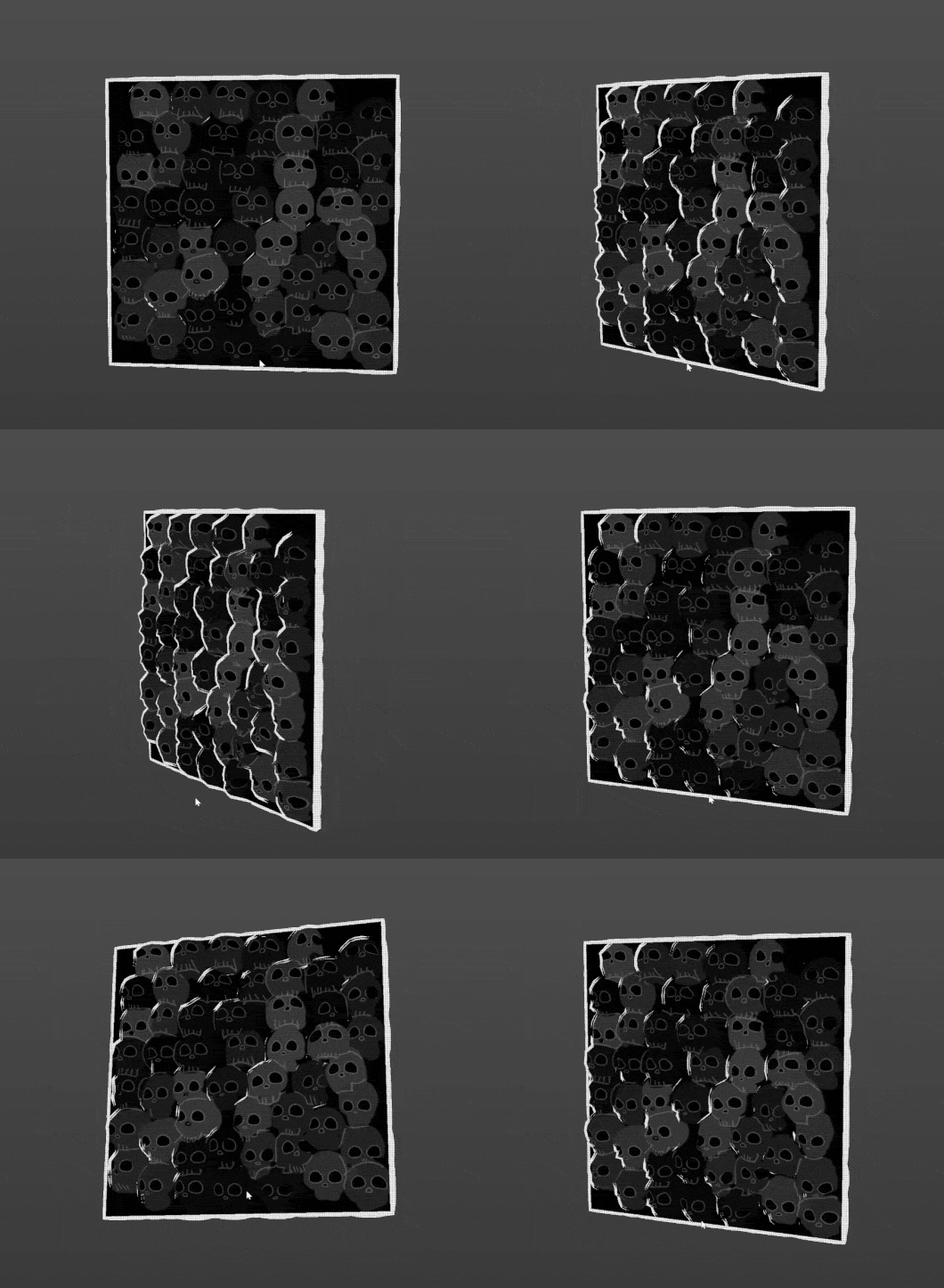
At this point the asset felt ready to begin placing in the game. We positioned the props adjacent to other skull tiles, to try to hide the fact it’s not a continuous wall.
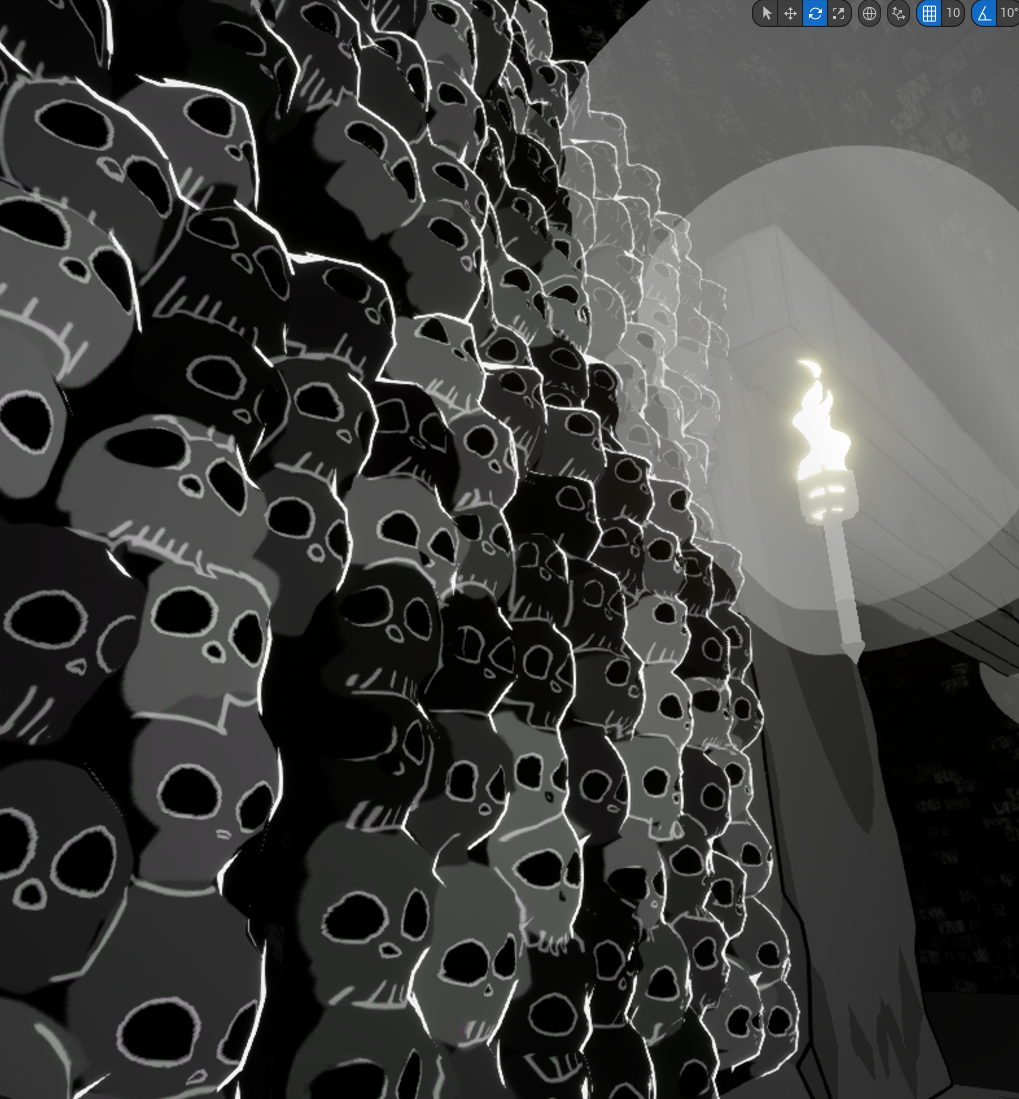
Without giving too much away, the skull wall feels right for the environment right now, so we’re going to continue to use it to build out this scene. It’s very likely that as development continues, we’ll improve on this prop slightly, maybe tweak the linework or coloration, but for the most part it looks good and matches the style of the rest of the game.
We hope this sneak peek at this new environment has got you a bit excited for the new things we’re cooking up, we can’t wait until you can experience it for yourselves!
That’s all for now, Happy Halloween!
Feral Cat Den